
MKWC’s Habitat Restoration Project at Thompson Creek Puts Local Youth at the Center of the Stewardship Effort
Students from Seiad Elementary and Klamath River Union Elementary schools visited the recently completed fisheries restoration project on Thompson Creek in late October. Working with the staff from the Mid Klamath Watershed Council (MKWC), the students were equipped with the tools and knowledge to appreciate the transformation that had occurred there. Similar to many of the other projects implemented by MKWC and our partners, the Thompson Creek project is designed to improve the habitat for juvenile and adult salmon, including an off-channel pond and in-stream wood structures. However, this project was different in that it involved the youth from the planning stage through to completion so that by the time they viewed the completed project they could easily understand what they were seeing. Through repeated exposure and a whole picture perspective, the students' knowledge and memory about watershed restoration was deepened and solidified.
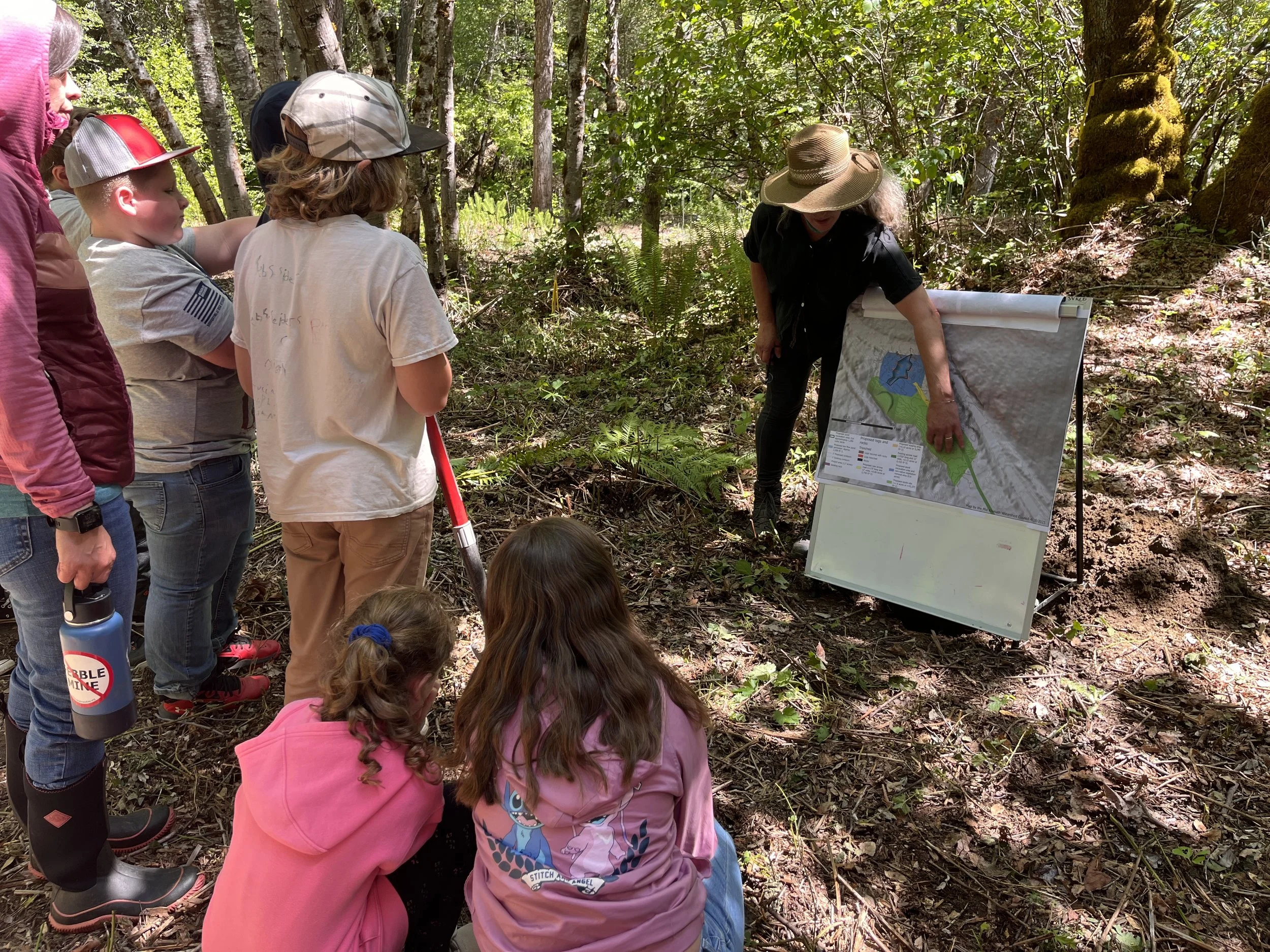
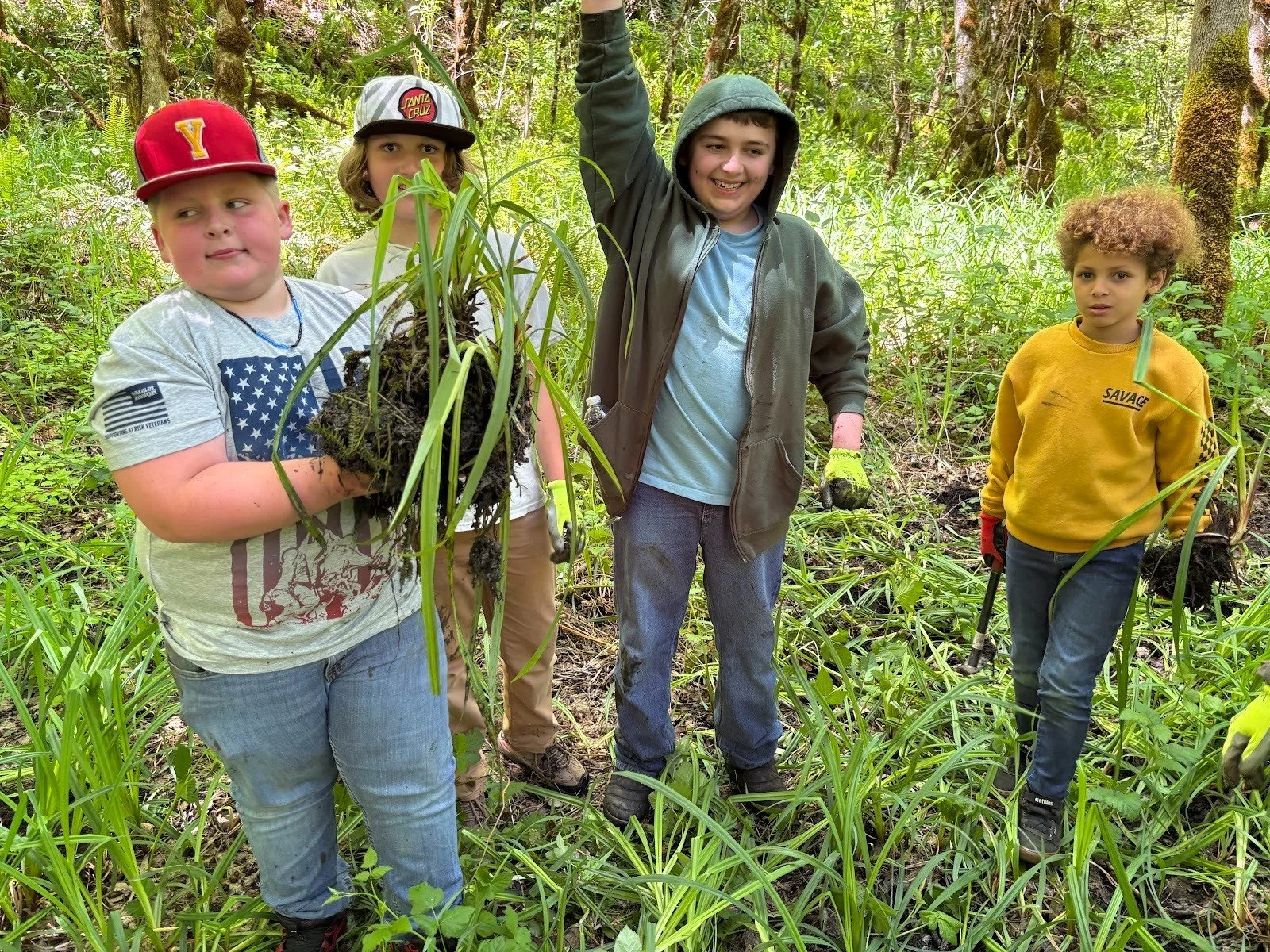
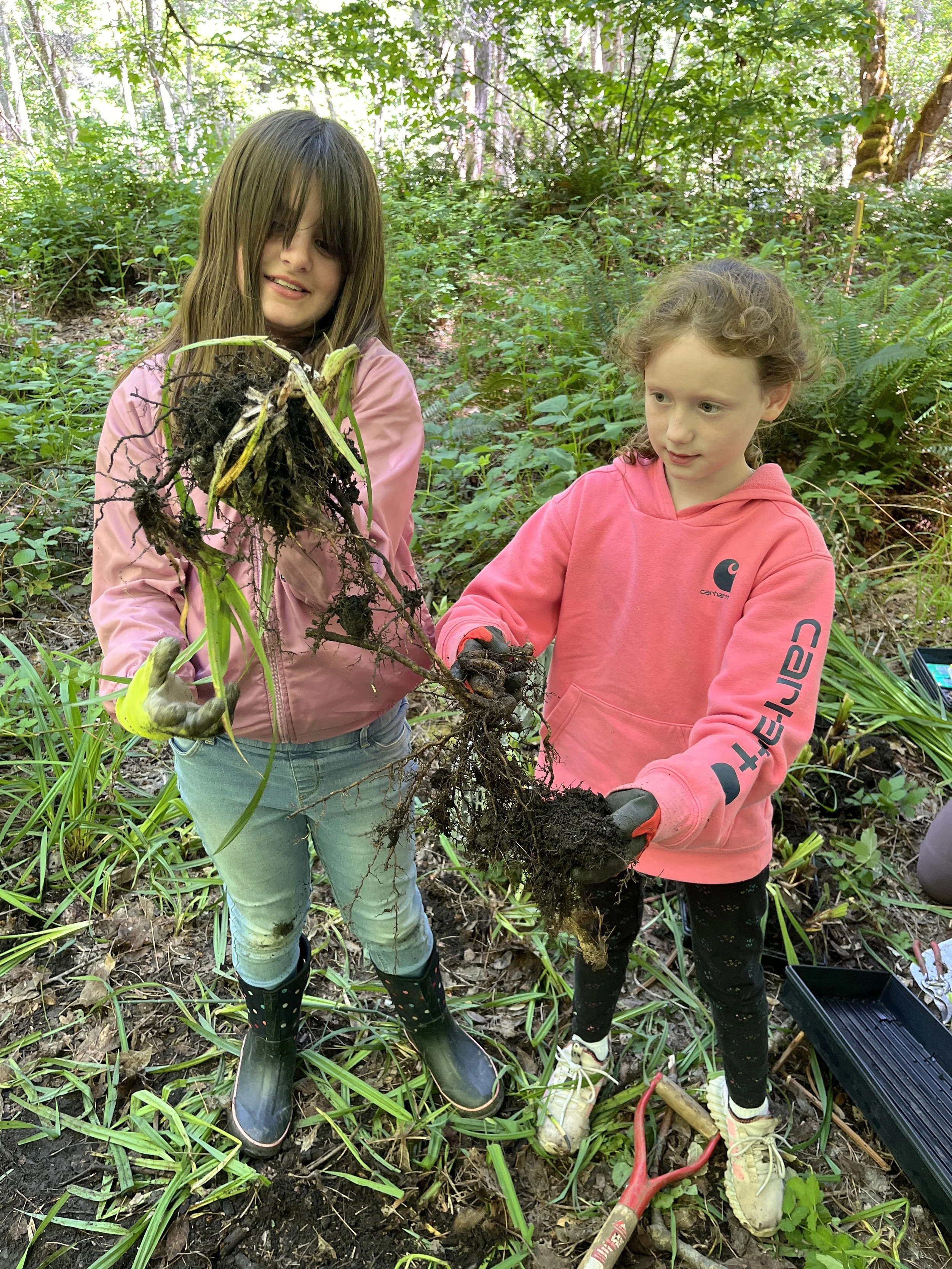
These same students had visited the site in May to learn about the process of planning and designing a habitat restoration project. MKWC fisheries professionals described the benefits that the project would have for salmon populations, and students were encouraged to imagine how the site could be improved for salmon habitat. Importantly, they did some of the muddy work of the project by digging up native sedge plants out of the planned pond footprint. The salvaged plants were placed near a water source where they would stay alive to be replanted after project implementation.
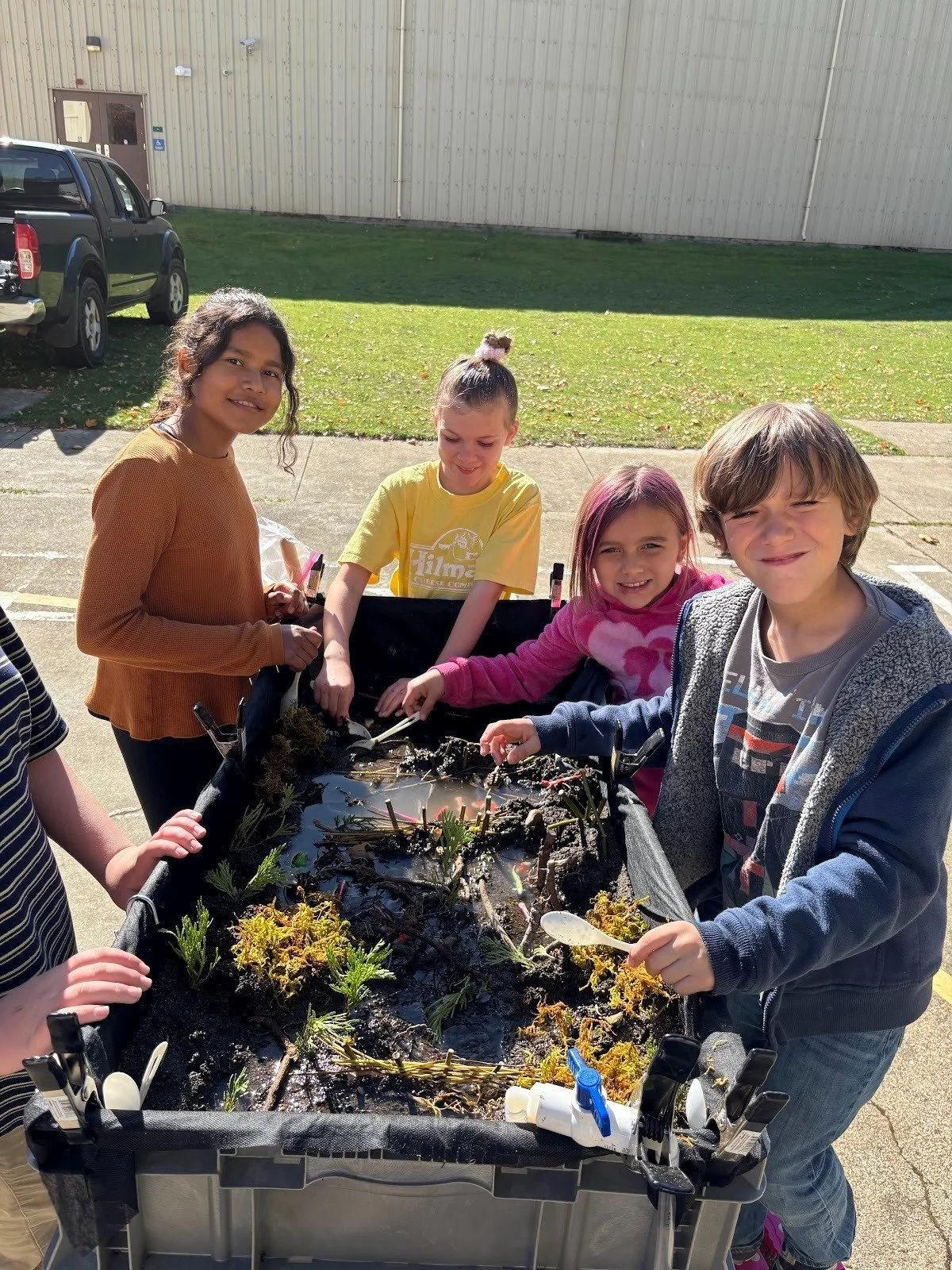
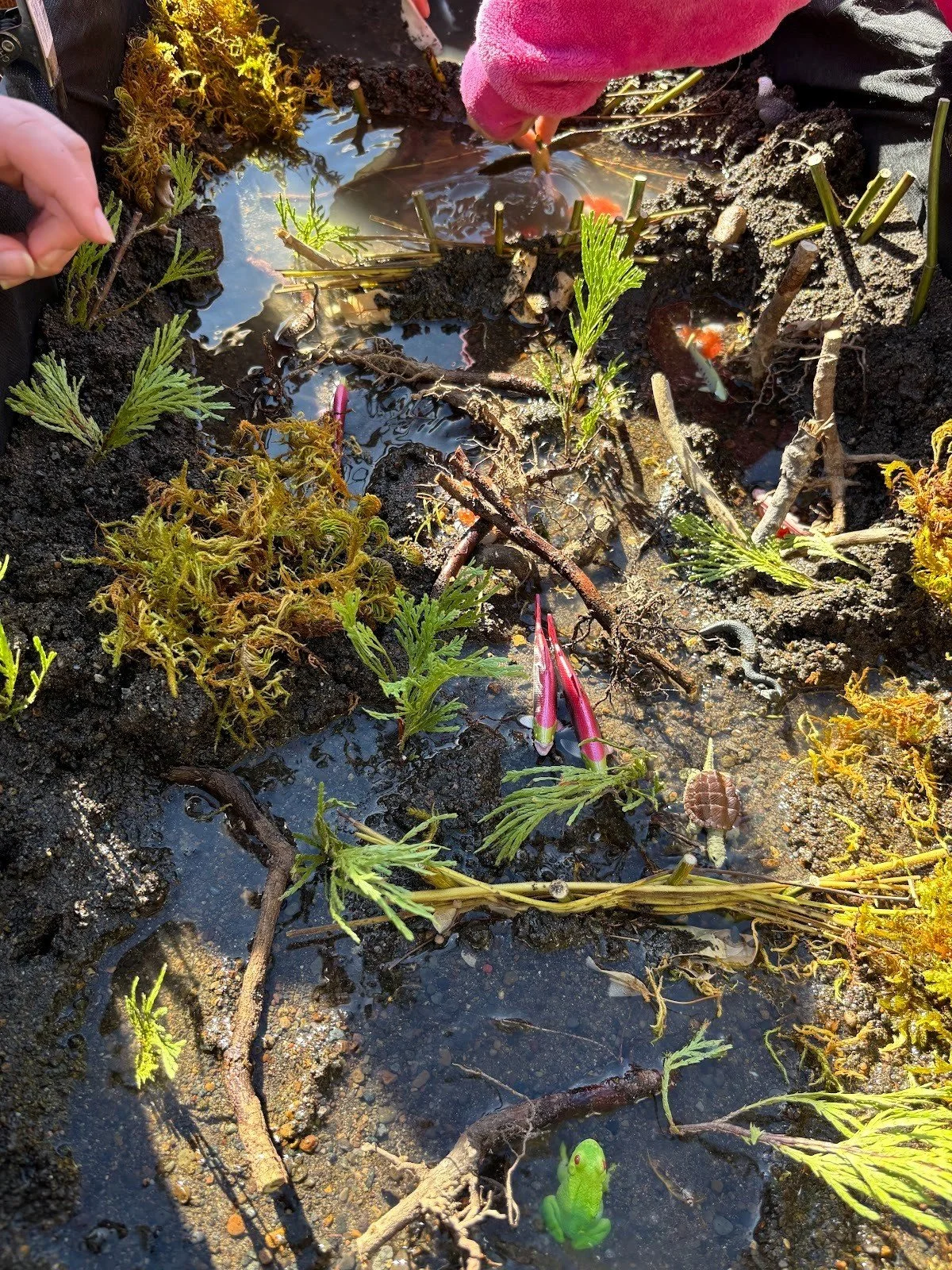
Additionally, MKWC staff visited the students at their schools. Educational posters were used to teach about off-channel ponds, wood structures, and beaver dam analogs (BDAs). (Check out our new Fish Habitat Restoration Posters on Wood Structures, Off-Channel Ponds, and BDAs and maybe learn a thing or two yourself!) Students worked in small groups to try their hand with the different restoration techniques by modeling a habitat restoration project in a 4’x2’ recirculating stream table. The stream table activity allowed students to observe how water flows through a river valley and how landscape contours and woody debris can create fish friendly features such as braids, side channels, pools, and gravel deposits. Next, they saw how human impacts such as containment berms and the removal of wood decreased stream complexity and increased erosion, leaving the habitat degraded. Then students got busy restoring the model stream. They used spoons as their excavators to dig off-channel ponds and added sapling sticks with roots as wood structures in the stream and ponds. They saw how the water in the ponds stayed calm even when more water was pumped through the stream table and how the wood structures provided good cover and encouraged stream complexity. They built BDAs to activate the floodplain using smooth maple sticks as posts and flexible pine needles to weave between the posts, and saw how these structures spread out and slowed down the water. They put in moss and cedar leaves to represent native plant revegetation. Finally, they added toy salmon and other riverine wildlife figurines to the improved habitat. With an element of play, the stream table activity reinforced students’ understanding of the real-life restoration projects being implemented in their local streams.
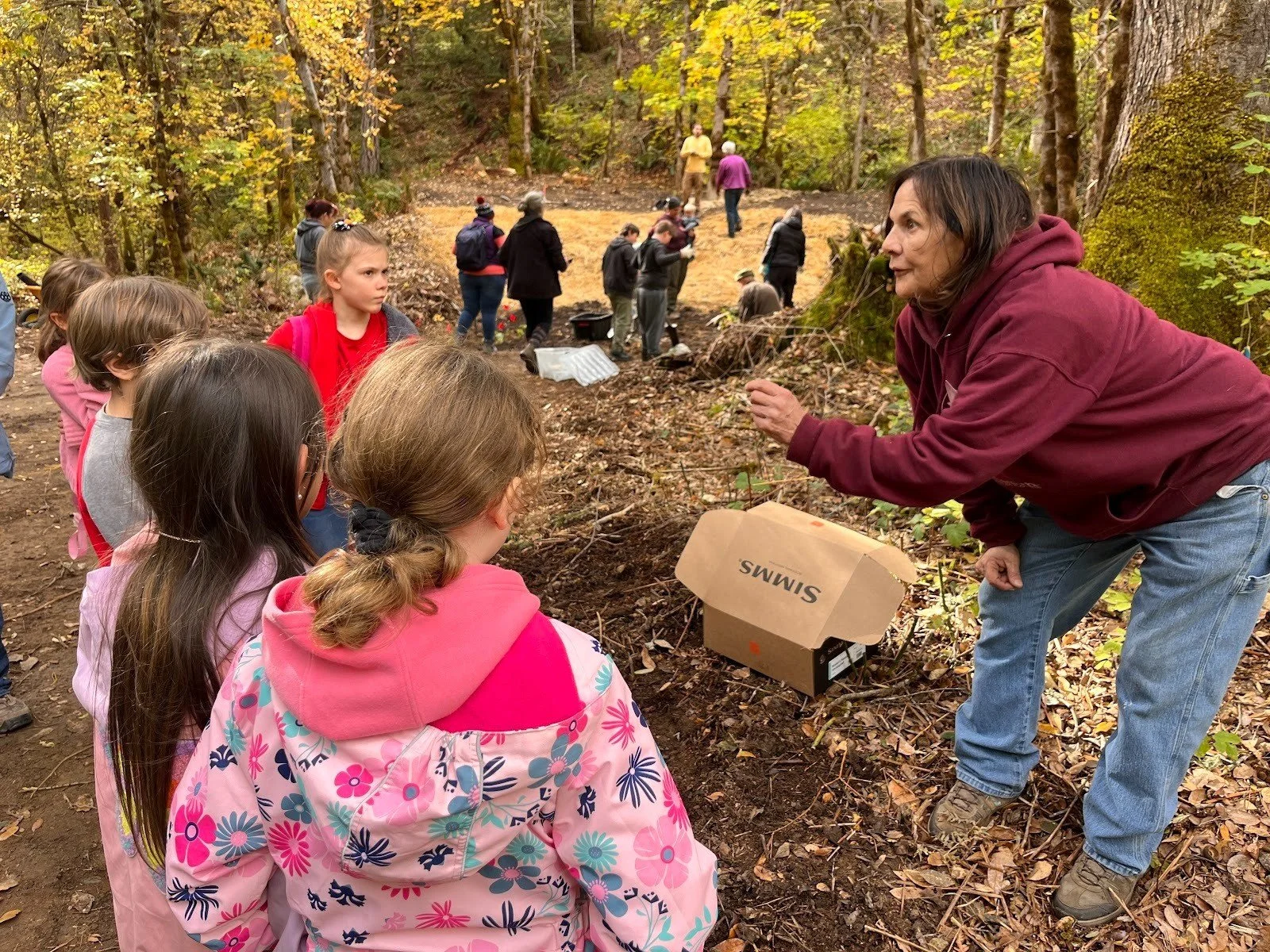
When they returned to the Thompson Creek project site in October, students were already familiar with what they were seeing. They replanted the same salvaged native sedge plants that they had dug in the spring around the new off-channel pond. They were excited to share their knowledge about the benefits of the newly placed wood structures. Their awareness of the native plants on site was reinforced during a native plant walk, and they were fascinated to geek out on the technology involved in the solar powered PIT tag array that will collect data from salmon that enter the pond. With the combination of repeated site visits and classroom learning, students emerged from their involvement in the project confident in their understanding of salmon habitat restoration.
Involving people in land stewardship is integral to the mission of the Mid Klamath Watershed Council. We know that watershed restoration needs community support in order to have lasting effect. In cooperation with our partners, we place high value on working to foster a community of land stewardship in our watershed. The involvement of elementary school students in the Thompson Creek project was one step in that direction. In order to understand and support watershed restoration, the community needs to be included in the process and informed about how it works. Sharing information with the youth is one way to spread knowledge into our communities. In ways subtle and undaunted, the youth disseminate what they have learned as they grow into the next generation of watershed stewards.
Thank you to partners involved in this project: National Fish & Wildlife Foundation, US Fish & Wildlife Service, and the Karuk Tribe.

Sponsored with assistance from the Karuk Tribe.
The views and conclusions contained in this document are those of the authors and should not be interpreted as representing the opinions or policies of the U.S. Government or the National Fish and Wildlife Foundation and its funding sources. Mention of trade names or commercial products does not constitute their endorsement by the U.S. Government, or the National Fish and Wildlife Foundation or its funding sources.