Beaver Dam Analogues
MKWC Fisheries try to mimic beavers by building Beaver Dam Analogues (BDAs) with the goal of creating summer and winter rearing habitat for salmonids, as well as connecting creeks to their floodplains.
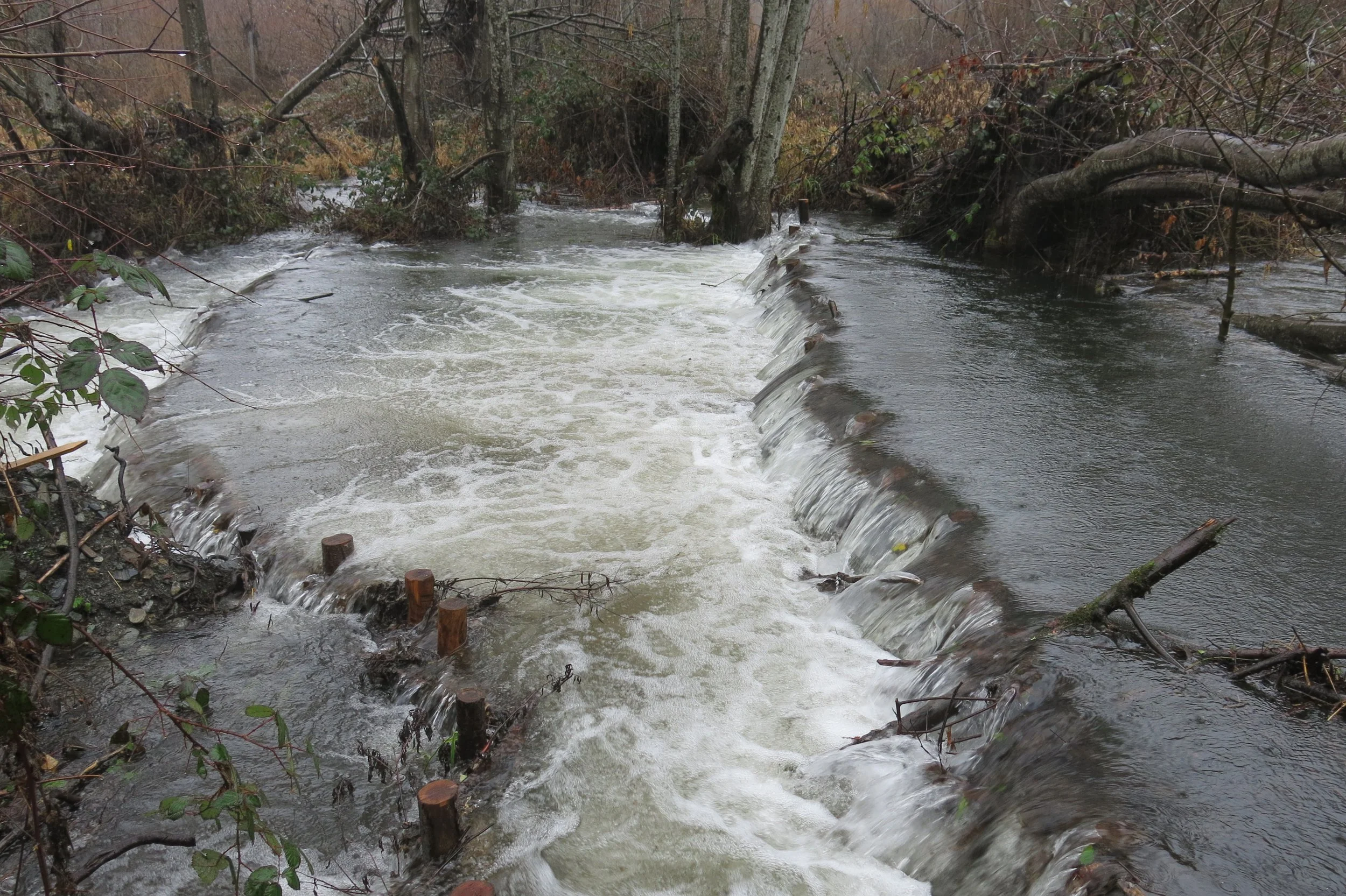
Natural beaver dam on Boise Creek on December 13, 2010. Unfortunately, this beaver dam was blown out in the winter of 2010/2011.
MKWC Fisheries led by Jimmy Peterson, installed a human made beaver dam to replace the one that was blown out in the winter of 2010/2011. A series of "beaver dam analogues" (human made beaver dam) connects Boise Creek to over a 1/2 acre of off-channel ponds that provide valuable summer and winter rearing habitat for salmonids. The BDAs are maintained and repaired yearly by MKWC and the Karuk Tribe. In 2021, MKWC and the Karuk Tribe installed three more BDA's at two sites, Stanshaw and Sandy Bar Creeks.
Natural beaver dam on Seiad Creek on October 5, 2012. The beaver dams on lower Seiad Creek in the fall of 2012 were inspirational. They deepened the water level of the creek, making extraordinary fish habitat.
MKWC Fisheries installed 12 large wood structures into Horse Creek Valley in the fall of 2019. By the next summer beaver were adding to one of the wood structures, as shown in this photo taken on August 25, 2020. The combination of wood structure and beaver dam created a deep, cold, and low-velocity habitat for salmonids.
MKWC Fisheries personnel creating a beaver dam analogue on Camp Creek on January 6, 2011. We want to mimic beavers and the great work they do for our aquatic environment.
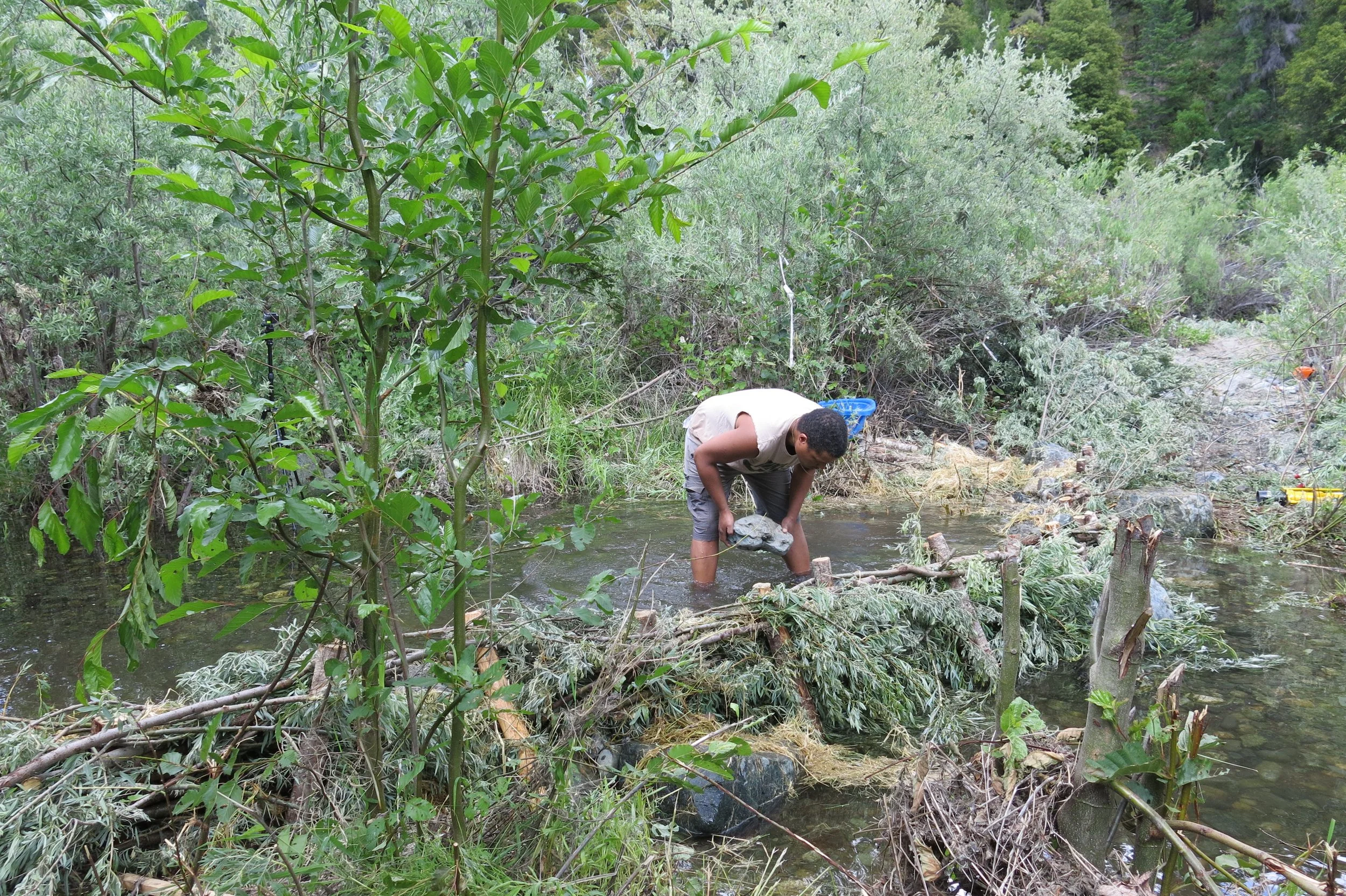
MKWC Fisheries and partners installed beaver dam analogues into Sandy Bar Creek in the summer of 2021. This photo taken on June 9, 2021, shows the human made beaver dam being built.
Natural beaver dam on Horse Creek on October 21, 2014. This beaver dam not only created a very deep pool for salmonids to rear in, but also spread the creek water out, decreasing velocities and creating a diverse environment for all aquatic life.
Off-Channel Ponds
Off-channel ponds are crucial rearing habitat for the threatened coho salmon. Coho prefer slow, low-gradient streams and pools. Extensive flood control berms along lower Seiad Creek have disconnected this prime floodplain habitat. These ponds have one connection to the creek and act as a spring fed back eddy. These ponds do not divert any water from the creek, but use creek level groundwater flow to fill. Studies show that ponds may even increase the water table as winter flows get held in the ponds instead of swiftly flowing downstream. The ponds have been dug and the surrounding area has been seeded with grasses, and willows have been planted. We are seeing high numbers of juvenile coho in the off-channel ponds.
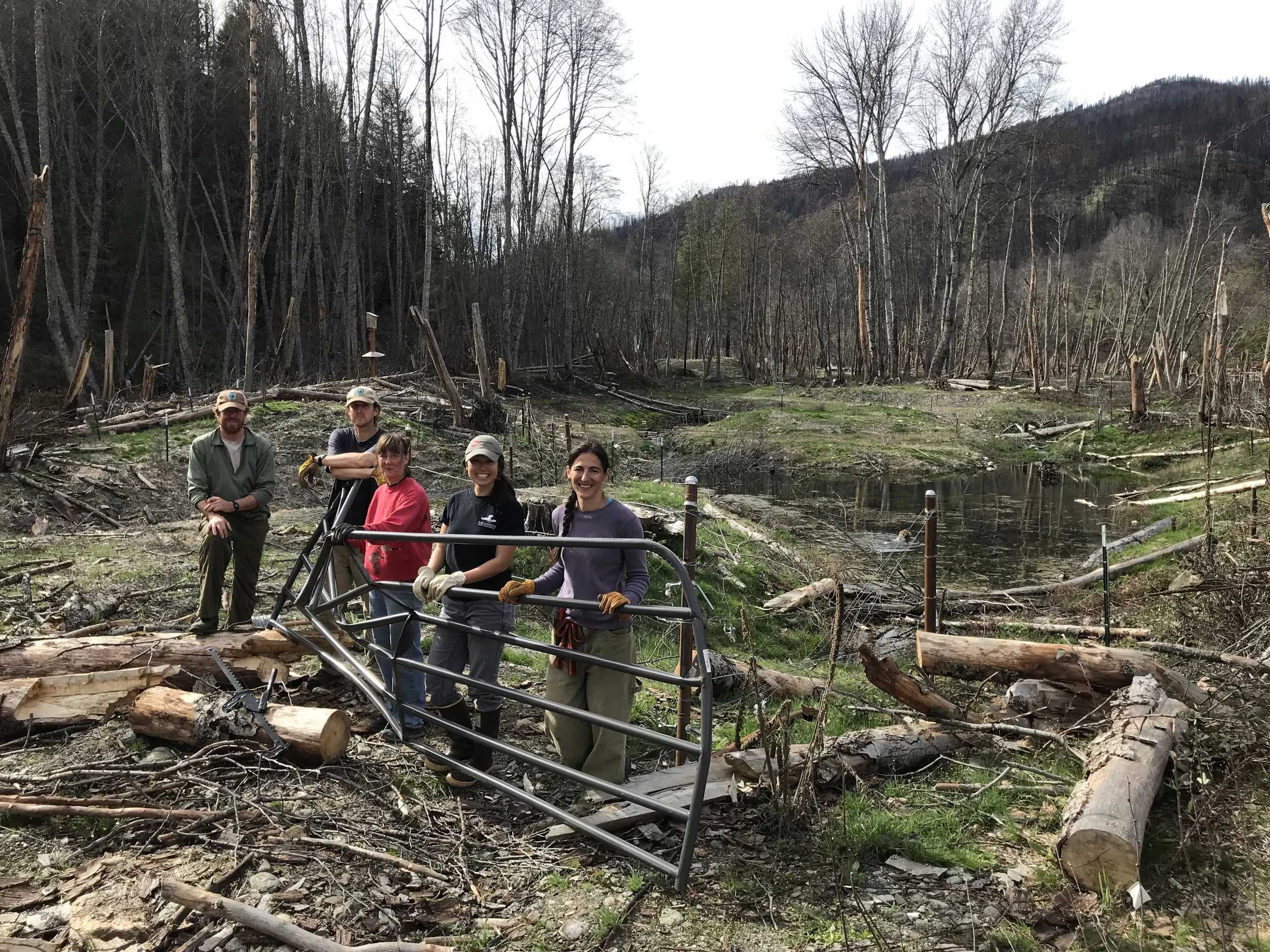
US Fish and Wildlife Service, landowner, and MKWC Fisheries personnel doing fence maintenance around an off-channel pond on April 3, 2019.
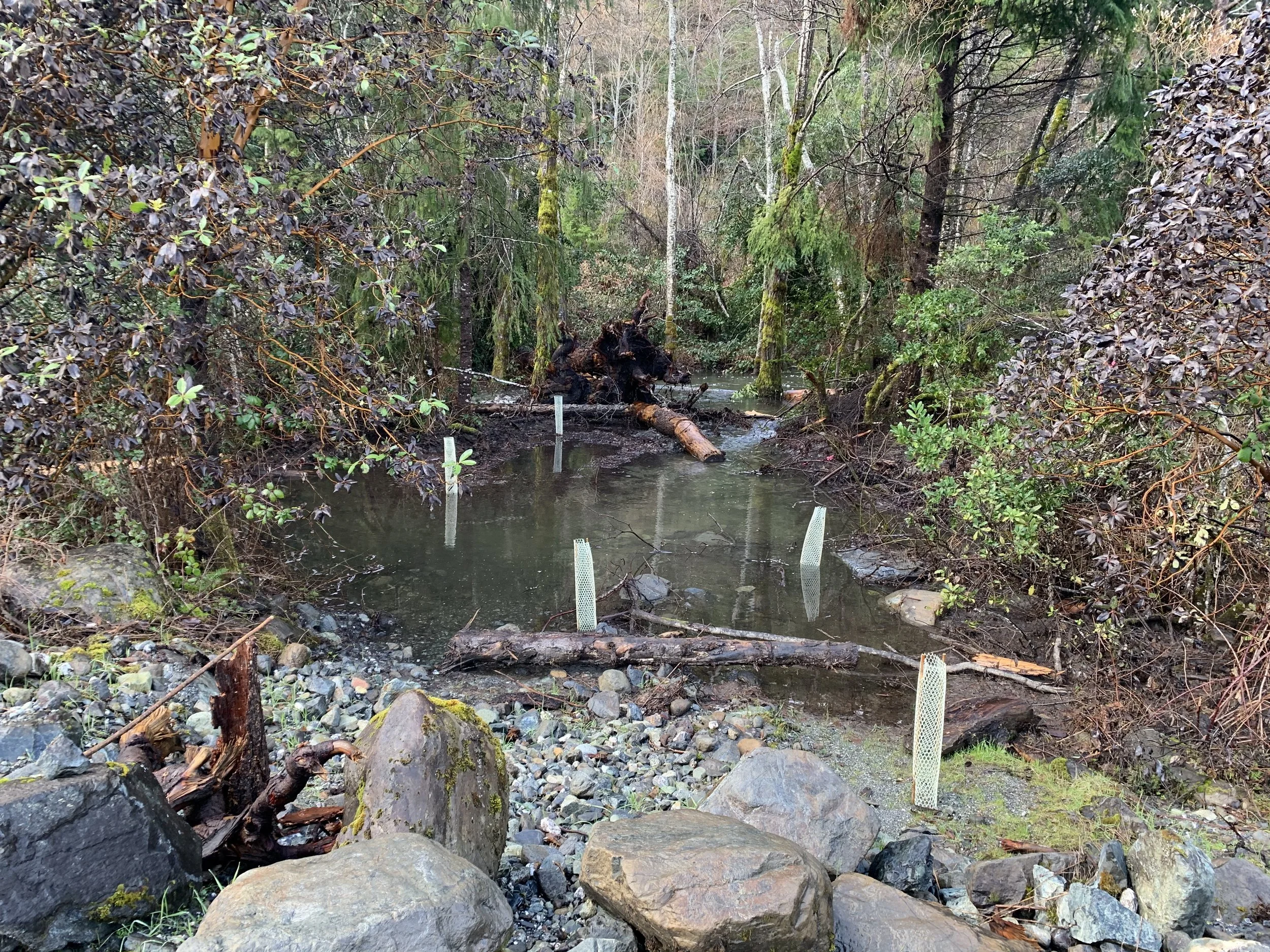
An off-channel pond being constructed on October 4, 2017. This ≈ 7,500 square feet pond was connected to Horse Creek in the fall of 2017. It provides low velocity winter rearing habitat for salmonids.
The gold standard for all of MKWC's off-channel ponds. The "Alexander Pond" was the result of MKWC's Fisheries Co-Directors Charles Wickman and Will Harling's hard work and vision, and was excavated in the fall of 2010. The MKWC used the Karuk Tribe's fisheries studies that showed the importance of off-channel habitat for Coho Salmon, to build a program that created these much needed rearing sites. Photo taken on April 29, 2011.
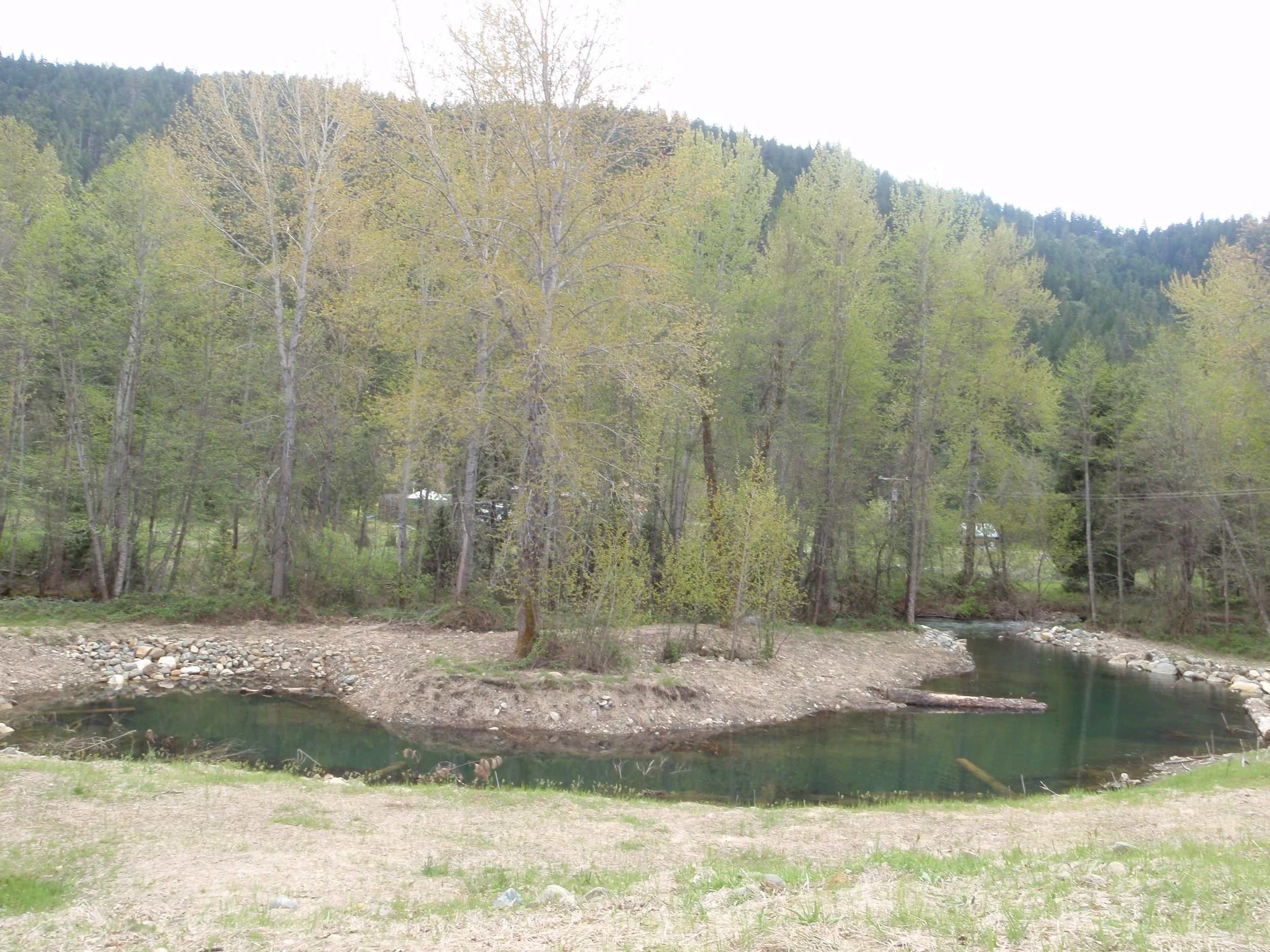
An off-channel alcove with contractor crew on September 26, 2019. This off-channel alcove is connected to China Creek.
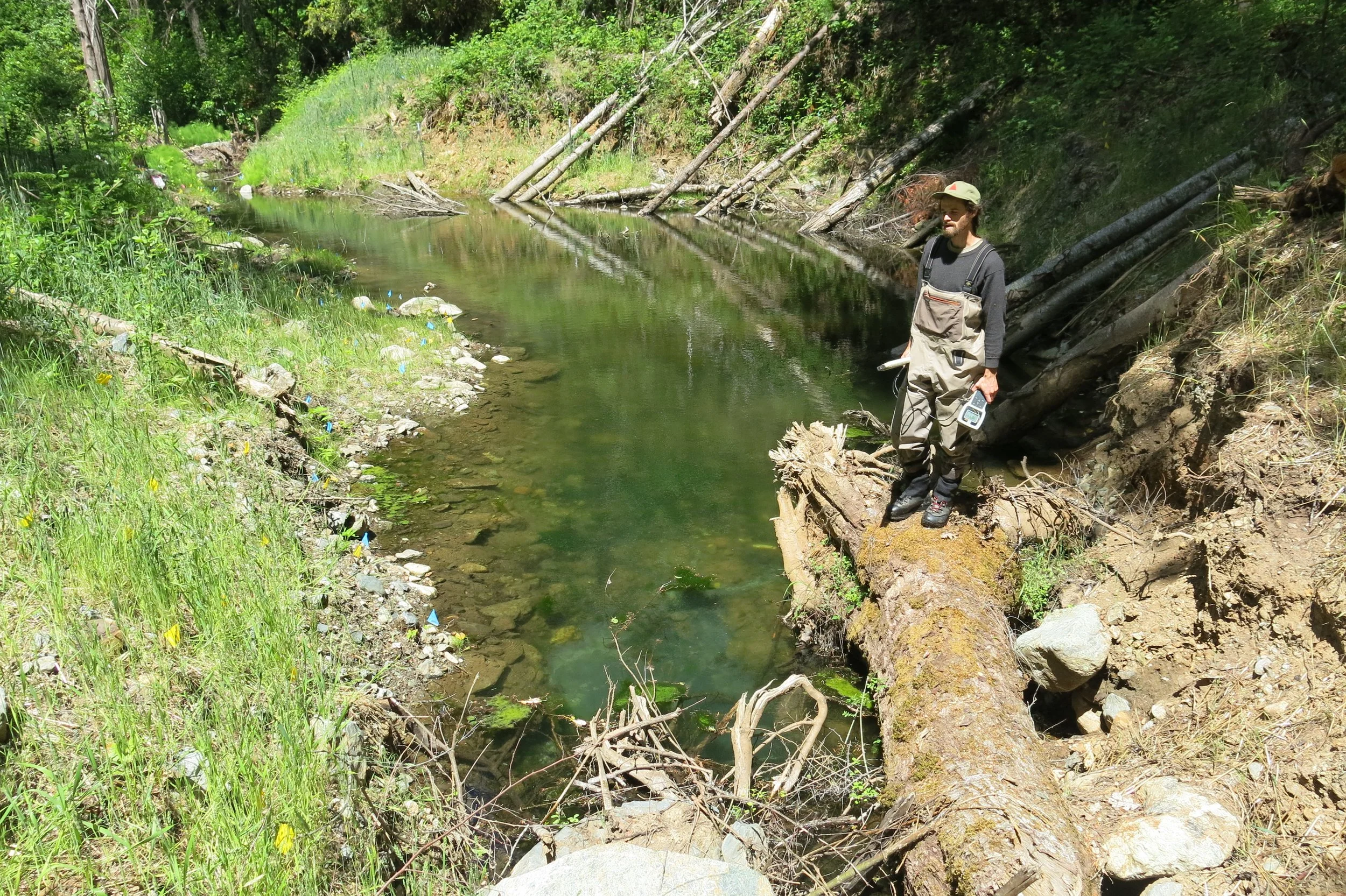
MKWC technicians at China Creek Pond in Spring of 2020 conducting water quality monitoring.
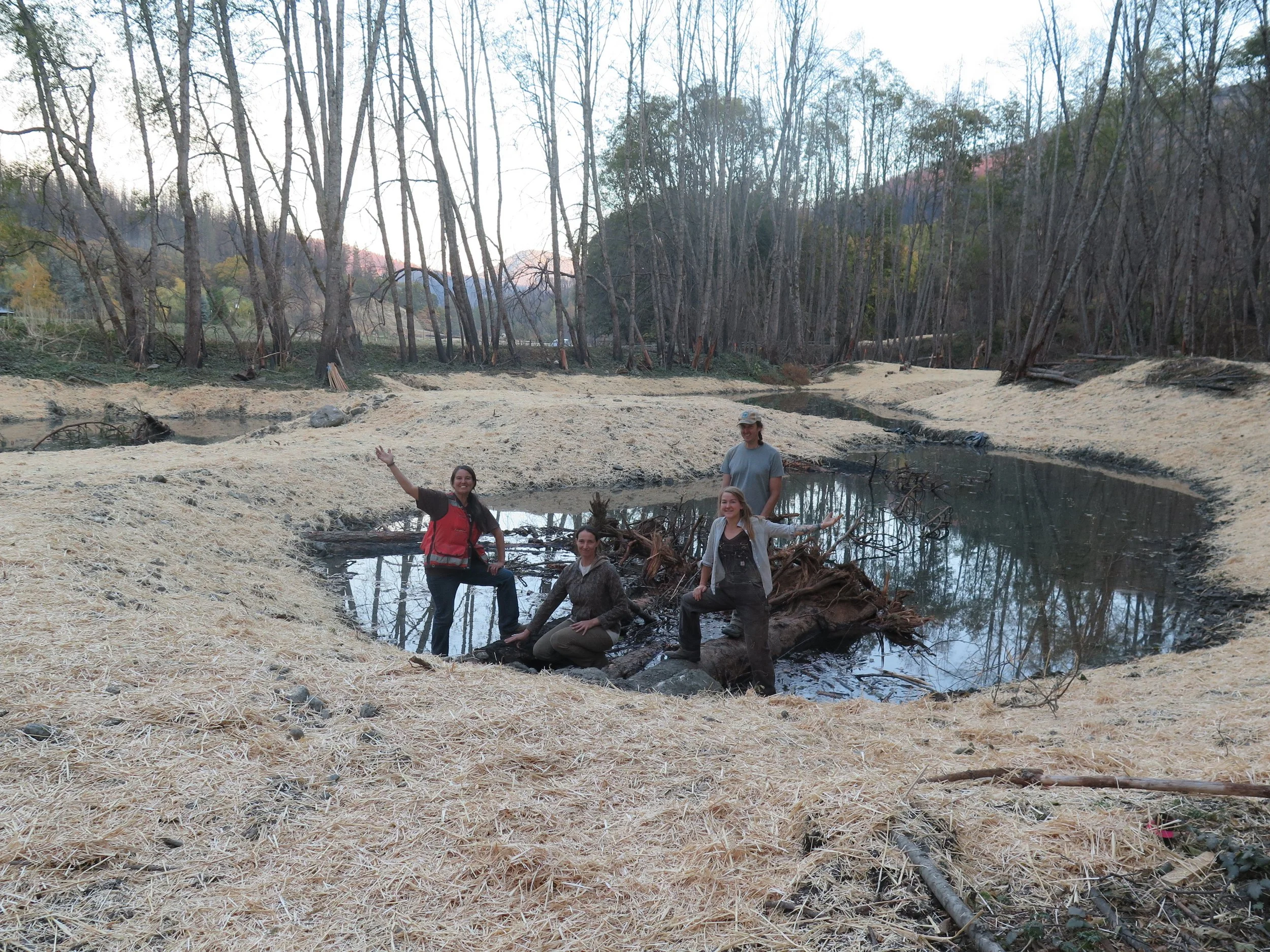
MKWC's Fisheries and Plants personnel happy to have completed mulching the banks of the newly excavated pond connected to Horse Creek. This pond has been utilized every winter since it was created by at least 500 salmonids. The salmon are seeking refuge from the adjacent creek, which has high velocities during winter and spring.
Channel Reconfiguration
MKWC Fisheries has had one large scale channel reconfiguration project, goal of project is multifaceted:
1) create flow diversity with side channels and alcoves,
2) engage the floodplain for a healthy riparian.
Seiad Creek Channel Reconfiguration: Before
Seiad Creek Channel Reconfiguration: After
Wood Loading
With the use of excavators and helicopters, MKWC adds large wood to streams to create pools, activate floodplains, create pockets of slow water for winter rearing, sort gravel for spawning, and provide cover for fish.
50 large logs with root wads were added to a 1/2 mile section of Horse Creek Valley in the fall of 2019. This photo taken on October 14, 2019 is looking downstream from the most upstream wood structure. 12 wood structures were added to the creek, with the intent of creating spawning habitat as well as increasing the quality of summer and winter rearing habitat for salmonids.
Aikens Creek wood structure on February 13, 2021. The wood structures installed in the summer of 2020 backed up high winter water for over a hundred feet pushing water up on the creek's floodplain and creating nice low velocity winter rearing habitat for salmonids.
MKWC Fisheries partnered with the Karuk Tribe, the Yurok Tribe, the US Forest Service, and the California Department of Fish and Wildlife to install 24 wood structures into Aikens Creek in the summer of 2020. Pictured here is the implementation crew on one of those installed wood structures on August 13, 2020.
Ground and flight crews for the Horse Creek Helicopter Wood Loading Project on October 20, 2020.
Horse Creek on March 18, 2020, before a wood structure was added to this part of the creek.
Horse Creek on December 9, 2020, after a wood structure was added to this part of the creek. Wood structures create habitat and spawning material for fish. These beautiful before and after photos were taken by MKWC's Michael Hentz.
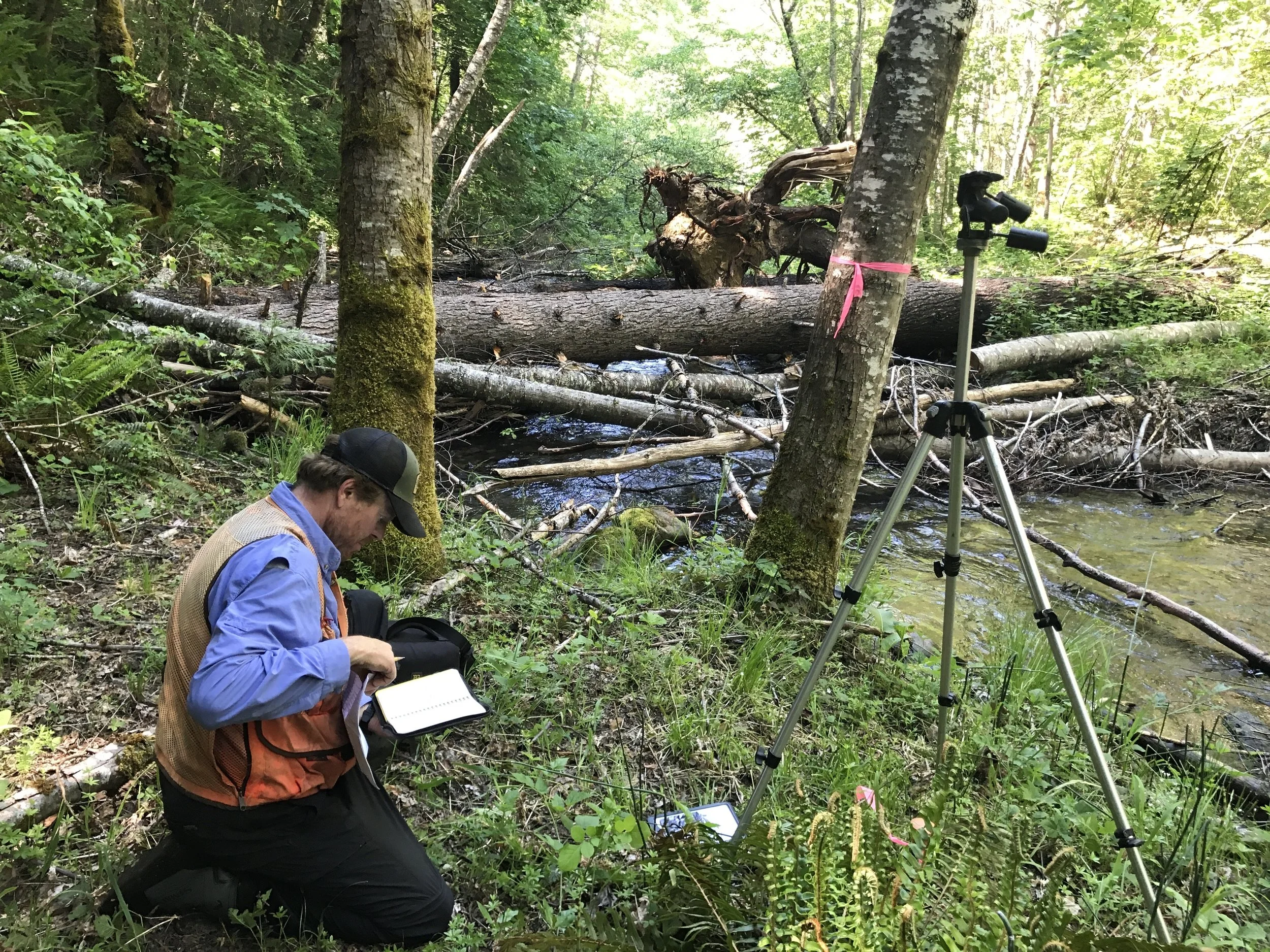
MKWC's Michael Hentz on June 2, 2021, photo monitoring the 35 wood structures added to 1.4 miles of Horse Creek. One of the 35 wood structures is in the photo's background.
Spawner Surveys
MKWC participates in a multi-organizational effort to monitor how many adult Chinook and Coho salmon return to the Klamath Basin to spawn. These numbers are especially important since we are dealing with threatened species.
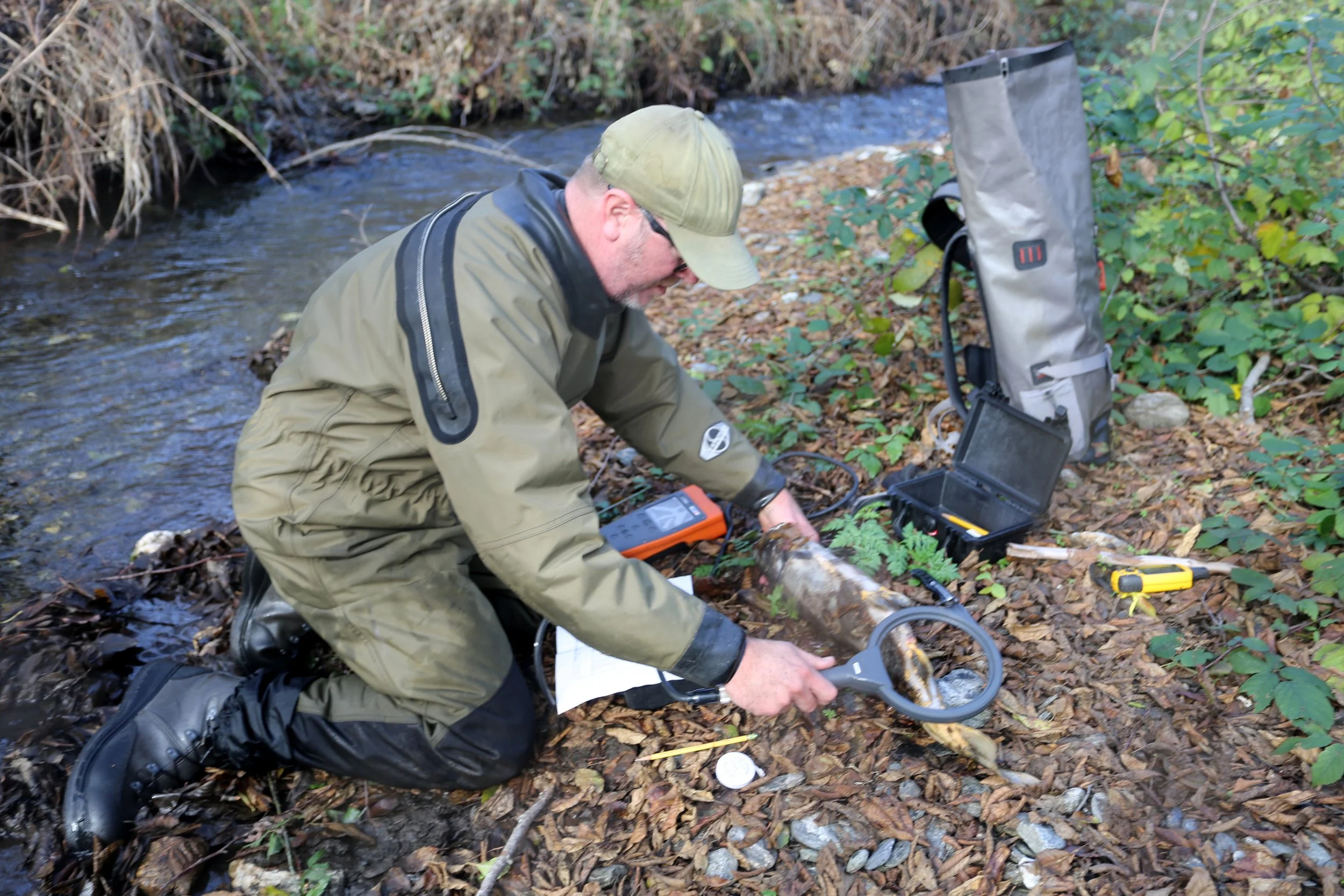
Fisheries Program Co-Director Charles Wickman scanning a Coho Salmon carcass for pit tags.
Fish Passage
Each year, MKWC completes manual fish passage work on tributaries to the Klamath River between the Trinity and Iron Gate. This work addresses fish passage problems by using hand tools to modify the creeks so that fish can access cold water. Additionally, MKWC Fisheries installs brush bundles to thermal refuge areas to provide cover for salmonids seeking cold water.
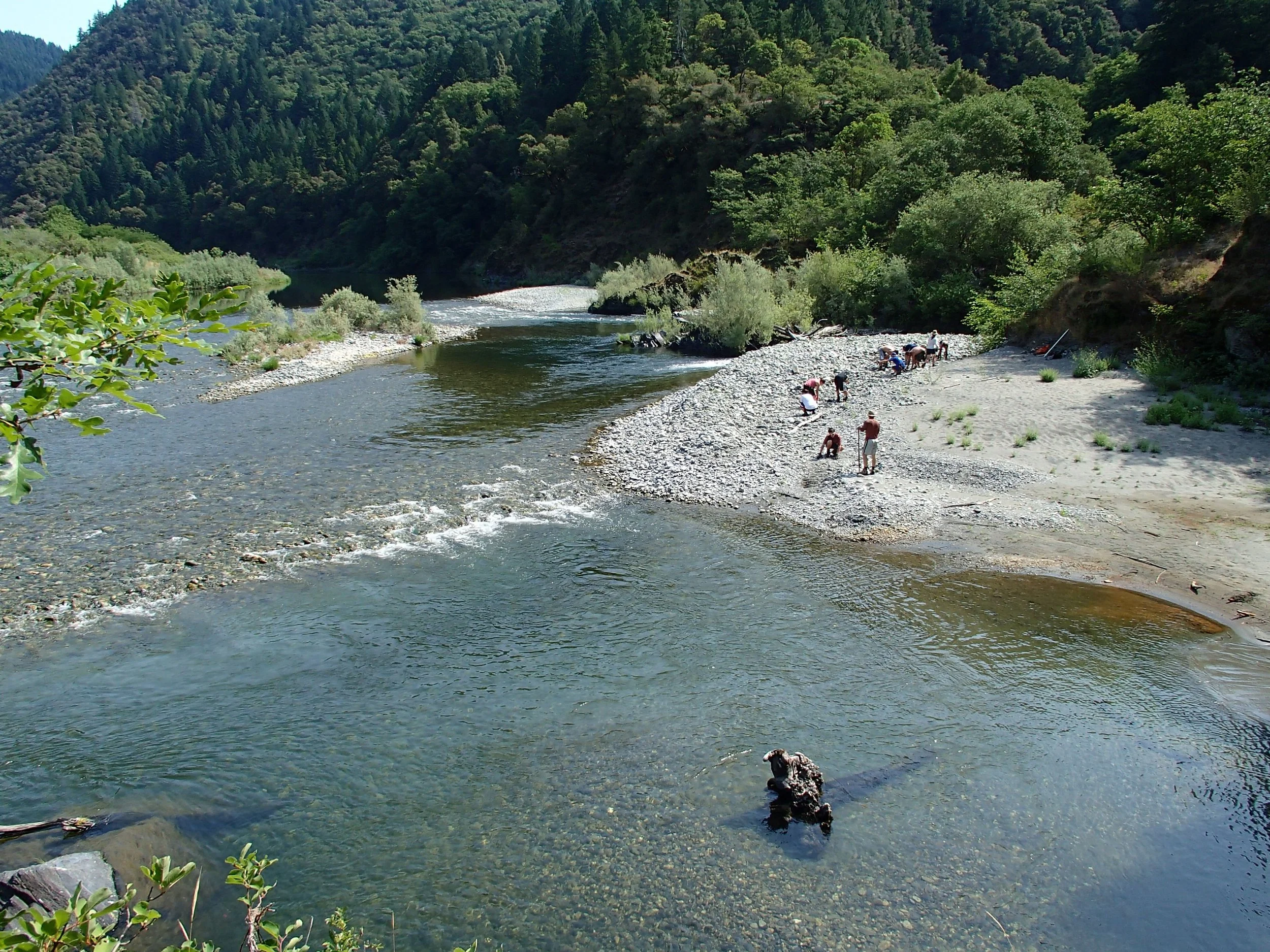
MKWC youth crew improves fish passage and enhances thermal refugia at the mouth of Red Cap Creek.
Juvenile salmonids at the mouth of a cold water tributary. Juvenile salmonids take refuge here from the warmer temperatures of the mainstem Klamath.
Tom Martin Creek before adding brush bundles to the alcove connected to the creek.
Tom Martin Creek after adding brush bundles to the alcove connected to the creek. These bundles of brush provide cover for salmonids, increasing their chance of survival.