
Stewardship in Action, A Day on a Prescribed Burn
By Josa Talley, Public Relations Specialist, Mid Klamath Watershed Council
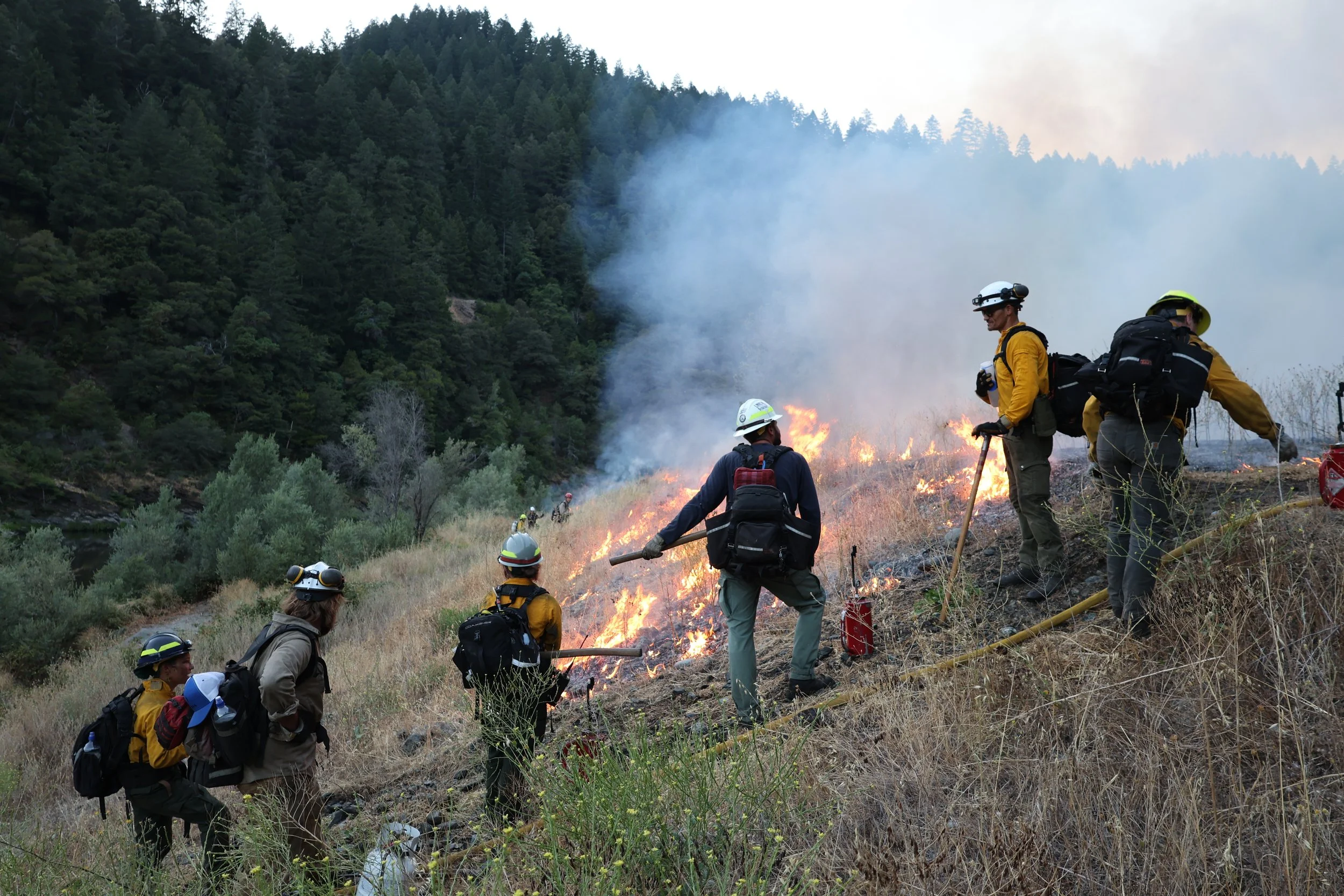
This summer, the Mid Klamath Watershed Council's Fire and Forestry Program, along with agency and community partners, has been carrying out a series of prescribed burns throughout the watershed. They have conducted 24 Burns over 16 burn days. The work is ongoing and will likely continue through mid-August, depending on the weather. Each burn is carefully planned to lower wildfire risk near homes and restore ecosystem health.
I spent a day documenting one of these burns. While the fire itself was impressive, what really stood out was the care and thoughtfulness in every step. Before setting up equipment and laying out hose lines, there was a strong sense of camaraderie. People checked in with each other and encouraged one another as they got ready for the long night ahead.
Before any ignition took place, Restoration Director Will Harling, serving as CARX Burn Boss, gathered everyone together for a safety briefing. He thanked the landowners for welcoming the crews onto their property and encouraged them to ask questions throughout the burn window. He also reminded everyone to remain aware of wildlife activity, emphasizing that while prescribed fire is an important restoration tool, protecting the plants and animals that live on the landscape is always part of the work.
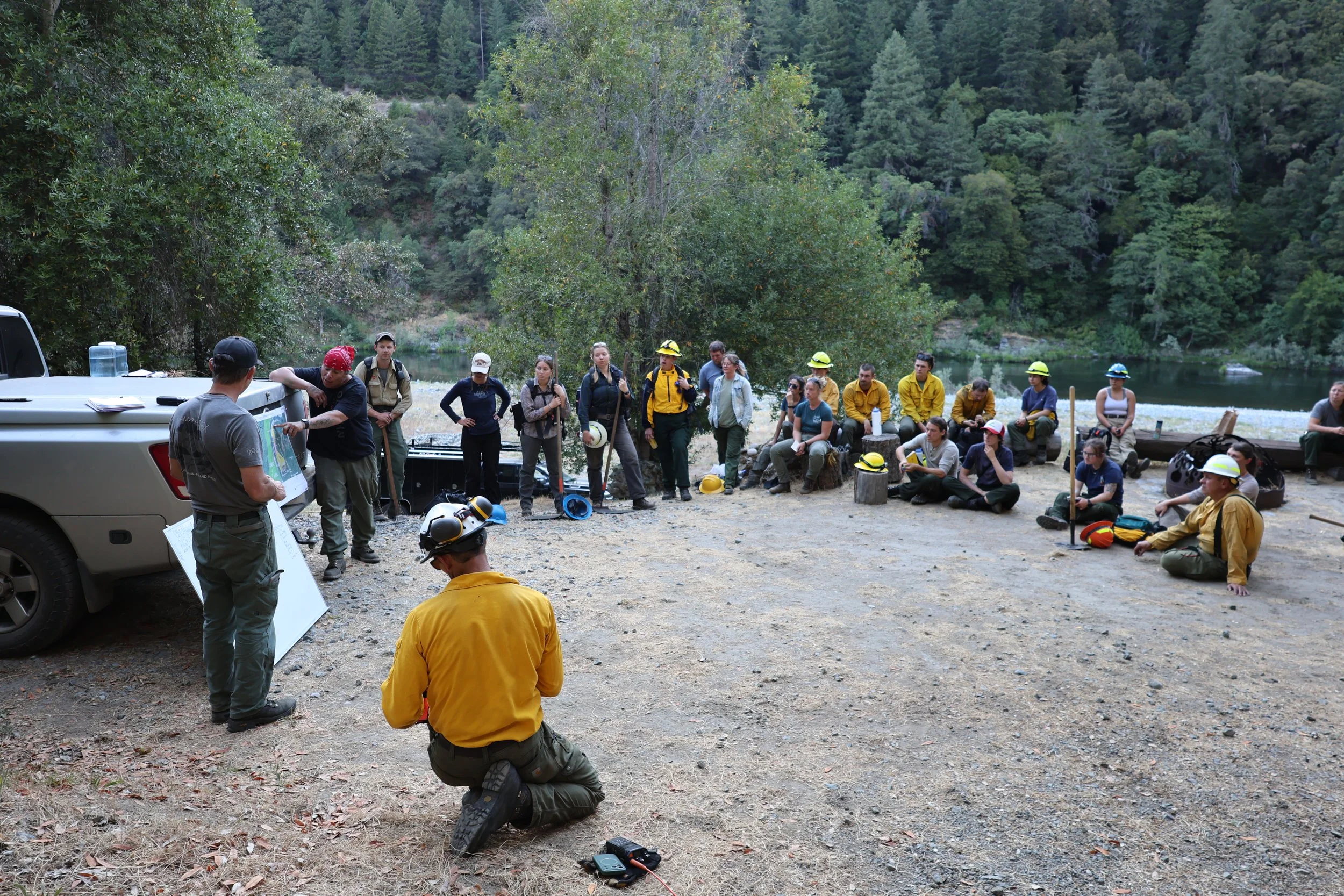
Nearby, Firing Boss Codie Donahue explained the plan for the initial test burn to his crew. Besides making sure the fire behaved as expected, he pointed out that the small test fire also gave wildlife a chance to leave the area before the main burn started.
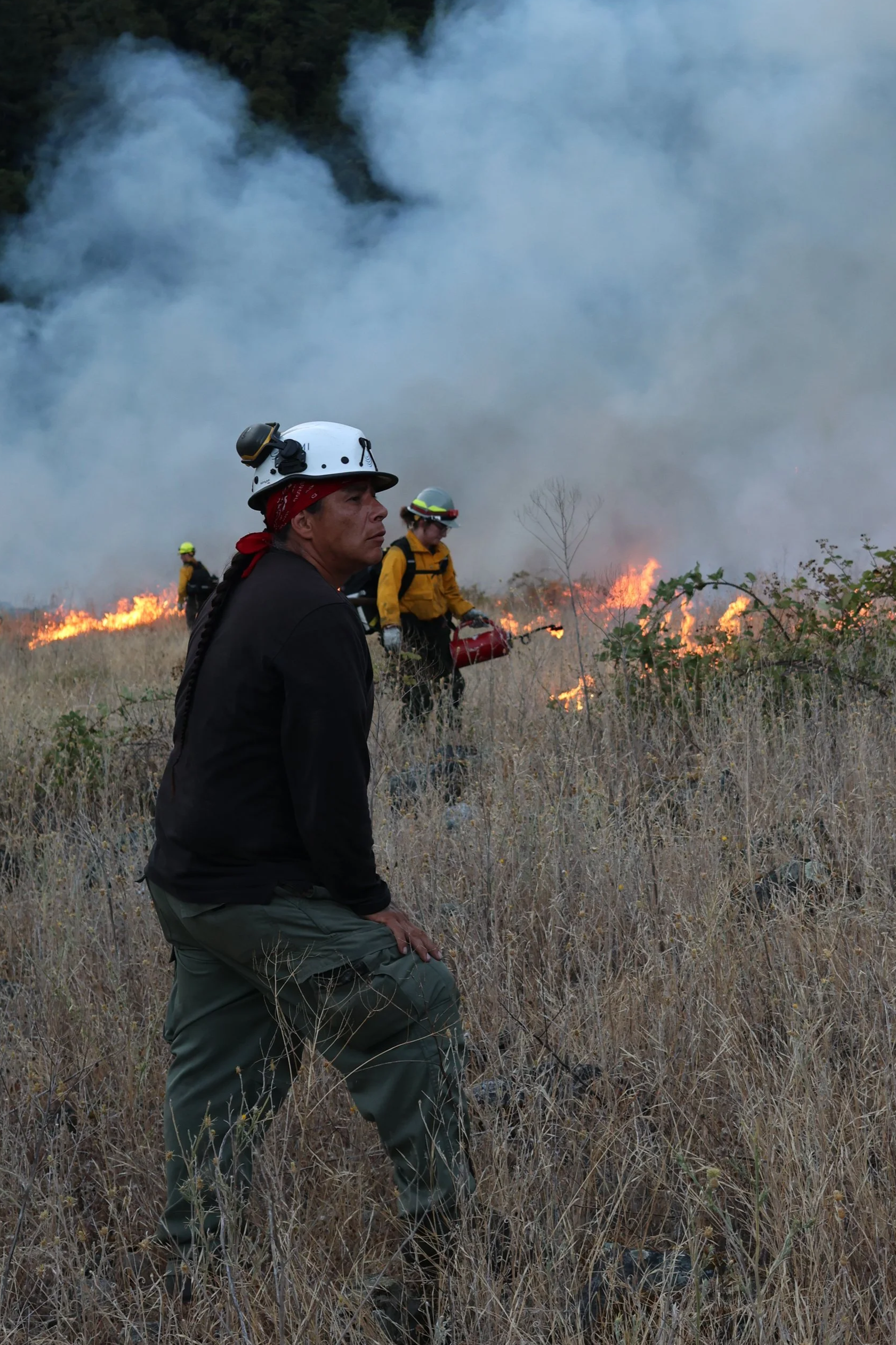
Right before starting the burn, a crew member spotted Buckwheat, a native plant, in the planned area. The crew quickly changed the ignition pattern to avoid disturbing those plants. This simple choice showed the careful attention to detail that guided the day's work.
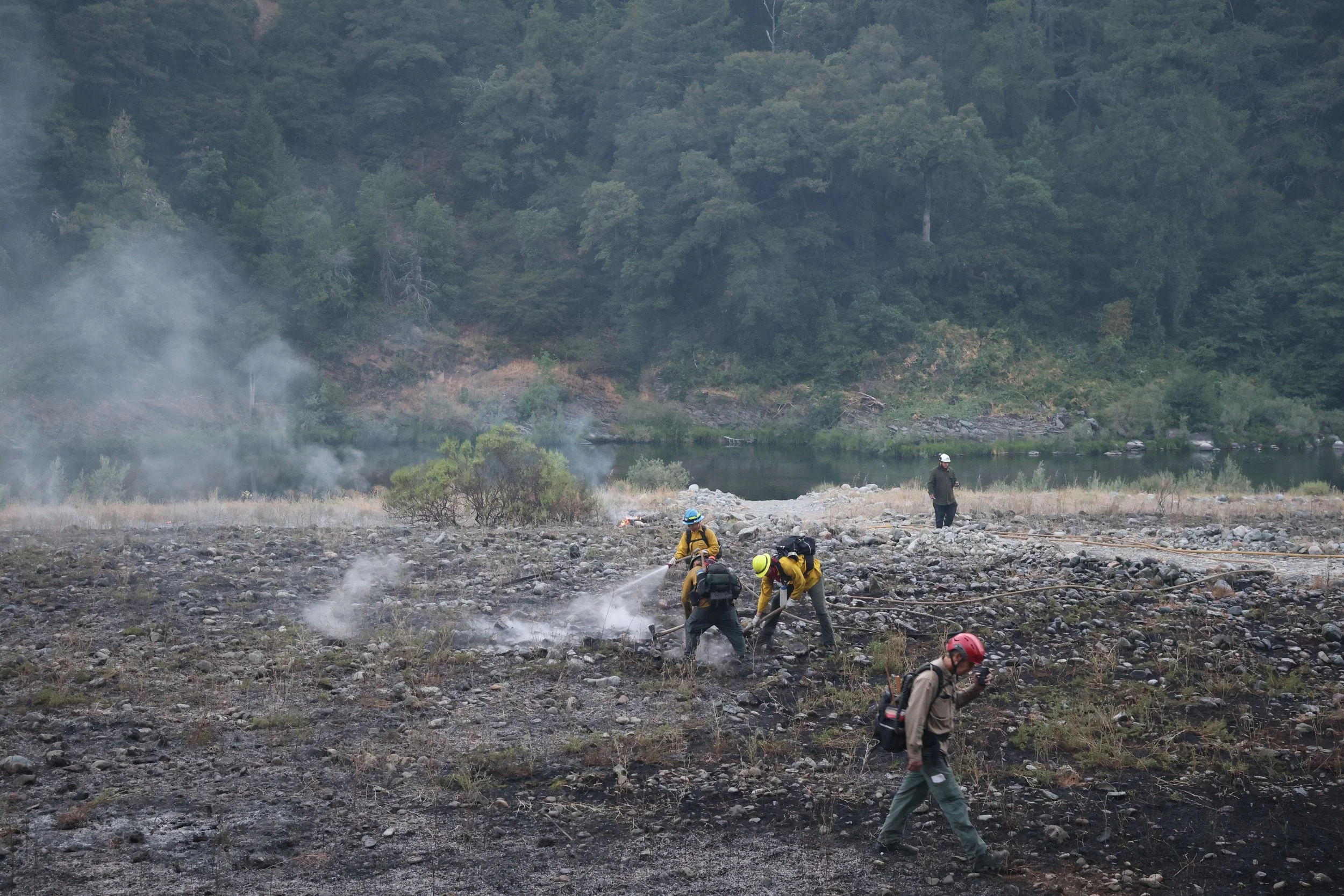
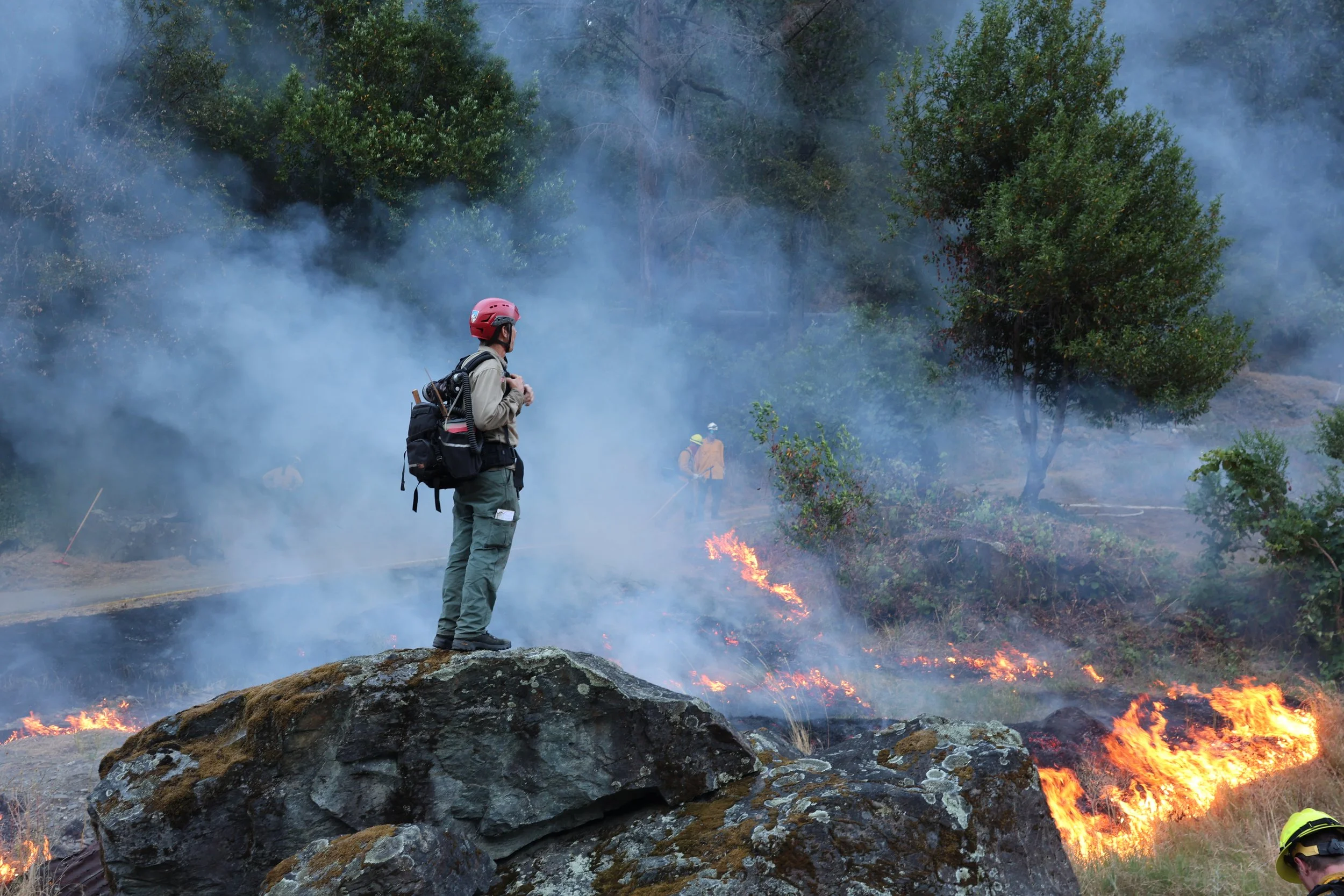
After the test burn showed conditions were right, crews moved on to the rest of the property. Dry grasses and invasive yellow starthistle helped the fire move steadily across the river bar, while firefighters closely watched how the fire behaved. Crews kept in touch and checked on each other throughout the burn. It was clear that everyone’s role mattered.
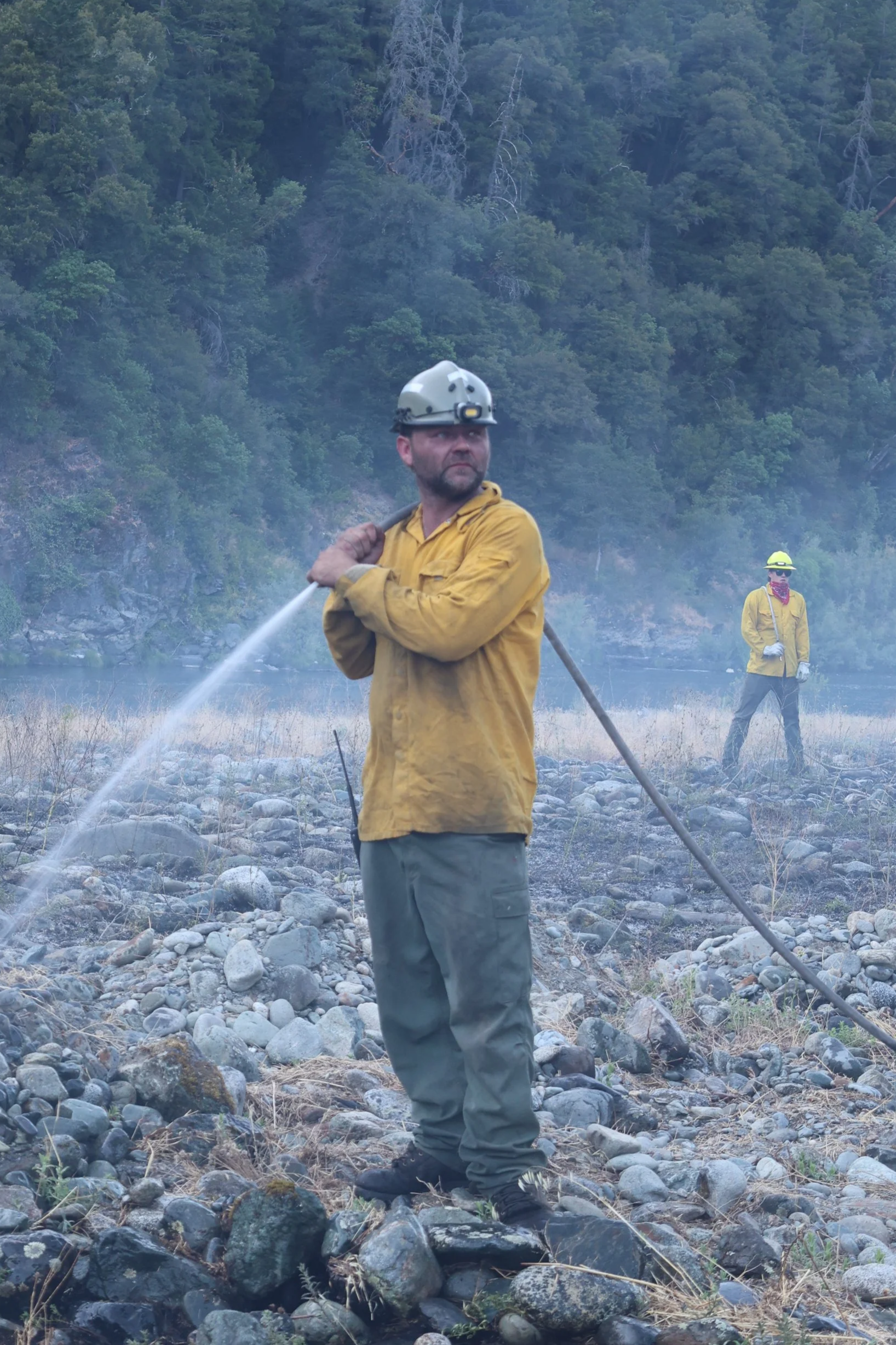
The crews never stopped paying attention to the environment. Ospreys flew overhead, and as the fire neared willow trees, crews paused to listen for quail before continuing on. Later that evening, Ignitions Crew Member Ben Woodman found a praying mantis on an unburned stem and gently moved it to safety before getting back to work.
Prescribed fire is one of the best ways to reduce hazardous fuels near homes and communities while also restoring natural processes. Each burn is planned, carefully and cautiously, and carried out by trained crews who work closely with landowners and partners to make sure it’s safe and good for the environment.
The crews worked late into the night to finish the burn safely and secure the area. Seeing the blackened ground where dry grass and invasive plants once grew gave a sense of what’s next for the land. Soon, the land will be flourishing with native plants and providing a rich habitat for pollinators.
Spending the day with the crews reminded me that prescribed fire is about a lot more than managing the flames. While the crews were burning at the Robbi unit there was a second burn just getting started at the adjacent property. A small group of individuals from MKWC and SRRC put together a plan to burn about an acre of riverside grass. This operation was also very successful. With both grass burns being completed in reasonable time the decision was made to burn about 2.5 acres of timber on the same property. This was the first timber unit burnt this year from this group and the fire effects were positive. Ignitions ceased at about 0100 in the morning and crews were released from the units by 0300. I left earlier in the night and made it home just in time to tuck my kids into bed. I felt grateful to see firsthand how much planning, teamwork, communicating, and genuine care goes into this work.
If you want to learn more about prescribed fire or get involved, MKWC's Fire and Forestry Program is always happy to connect with community members interested in training, education, or learning about the role of good fire in caring for the Klamath landscape. mkwc.org
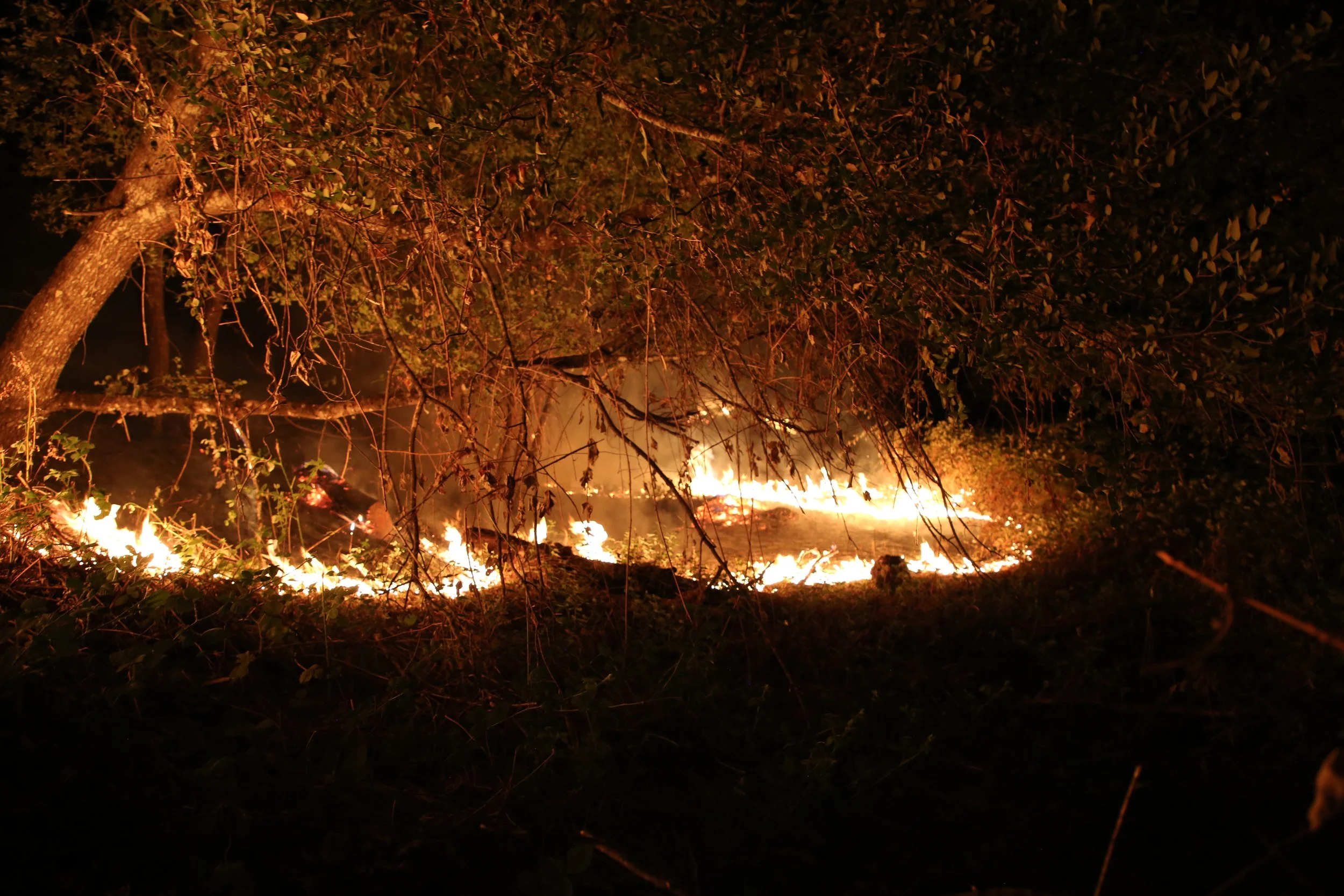
Photo by Eric Darragh